



Digital Citizenship
- Level Middle School
- Contact Hours 15
As our world becomes increasingly dependent on technology, it is essential that we help students learn how to behave safely and ethically online. This course prepares students with crucial skills to be responsible citizens in a digital future.
To view the entire syllabus, click here or click to explore the full course.
MODULES - 2
Students learn about Internet etiquette and how to stay safe on the world wide web. Students explore the potential effects of our digital footprints, how to protect information from online risks, and the implications of cyberbullying.
For this project, students create a Public Service Announcement (PSA) to teach their peers about digital citizenship and cyber hygiene. Students can select any of the topics covered in this unit.
Explore programs that your students will build throughout this course!
Here are a few examples of teacher resources and materials to use in the Digital Citizenship course
| Standards Framework | Alignment |
|---|---|
| Massachusetts 6-8 | 31% View |
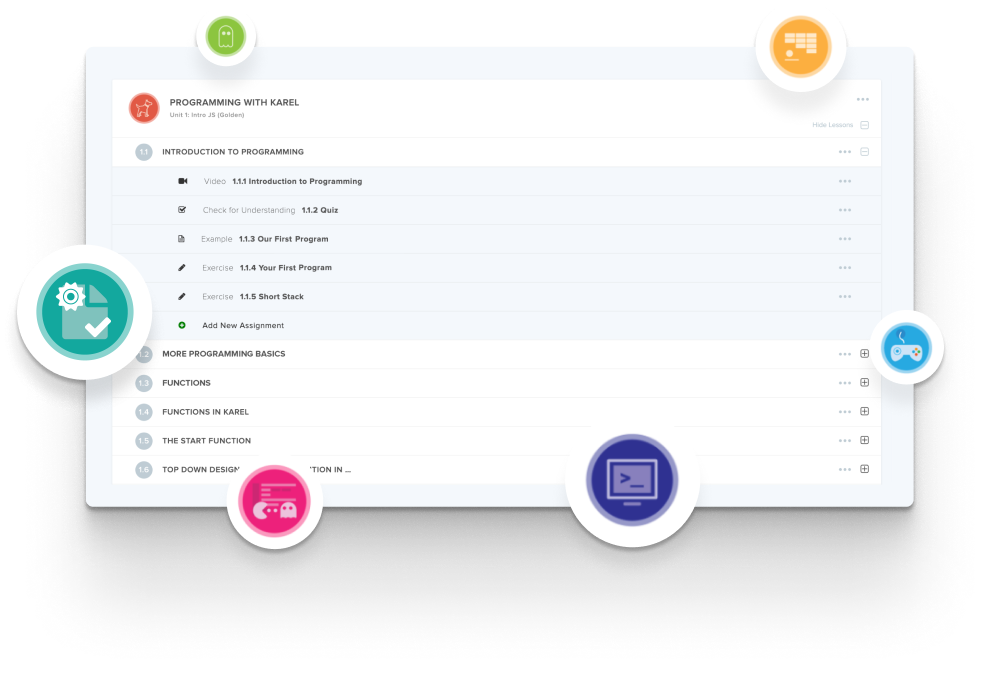
Create and organize Assignments in any CodeHS course that you're teaching. You can even add custom assignments to pre-existing CodeHS courses.
Learn MoreDidn't find what you were looking for? Here are a few links that might be useful to you.
Preparing students to behave safely and ethically online. The description frames it as giving students the skills to be responsible citizens in a digital future.
No. No programming language is attached to the course.
About 15 contact hours, sized to drop into an existing class rather than to fill a term.
CodeHS lists it in a handful of school-specific pathways at 6th and 8th grade. It is written for middle school.
There are also three grade-specific courses (Digital Citizenship 6th, 7th and 8th Grade) at 10, 15 and 18 hours, sitting in a Digital Citizenship in Middle School pathway. This is the older single course covering the same ground in one 15-hour unit.