


South Carolina IT Fundamentals
- Level High School
- Contact Hours 140
- Timeframe Year
South Carolina IT Fundamentals introduces students to the foundational concepts, skills, and practices that define the information technology field. Students explore cybersecurity principles, cryptography, operating systems, networking, data management, and introductory programming, developing both technical knowledge and professional readiness. Through hands-on labs, projects, and real-world scenarios, students build the skills needed to troubleshoot systems, protect data, and communicate effectively as IT professionals. By the end of the course, students will be prepared to pursue industry certifications, further CS coursework, and careers across the computing disciplines.
To view the entire syllabus, click here or click to explore the full course.
MODULES - 11
Students delve into key areas such as personal data collection, the reliability of online information, cyber ethics and laws, personal data security, cybersecurity essentials, and strategies to combat common cyber threats and their prevention, equipping individuals with the knowledge to navigate the digital landscape responsibly and securely.
Students dive into the history of cryptography systems, the motivation behind using encryption systems, and modern cryptography systems. This includes explaining the core concepts of Public Key Infrastructure and hash functions. Students will also explore the importance of digital certificates, and authentication methods.
Students create an escape room using what they have learned about ciphers and cryptography.
Students compare and contrast common operating systems (Windows, Linux, OS) and explain the importance of application security. They will investigate security options and implement user accounts to enforce authentication and authorization. Students will also demonstrate how to work with basic and advanced command prompts.
Students explore the structure and design of the internet and networks, and how this design affects the reliability of network communication, the security of data, and personal privacy. Students will learn how the Internet connects computers all over the world by use of networking protocols.
Students learn about the physical elements of computers and networking such as motherboards, RAM, routers, and the use of port numbers, ethernet, and wireless devices.
Students explore cybersecurity career pathways and build skills that will be needed within these fields such as communication. In this project, students will explore the troubleshooting methodology and utilize it to solve sample IT support issues.
Students learn about the benefits and dangers of collecting and storing large sets of data. They will learn how to prevent attacks such as SQLi and XSS using programming controls. Students will also learn about risk management and how to identify, assess, prioritize, and minimize risks.
Students design and create a board game or a card game that will help players to identify randomized security vulnerabilities and their appropriate defenses.
In this module, students are introduced to the fundamentals of programming by learning how to write basic code in Python using print statements, variables, user input, and arithmetic expressions. They’ll explore data types, string operations, comments, and the role of programming languages in creating interactive programs.
In this module, students explore computing careers and the professional skills needed to enter the field. They investigate the five computing disciplines, research job paths and certifications, and examine student organizations like FBLA, TSA, and SkillsUSA. Students also build resumes, practice interview techniques, and study workplace safety practices including electrical hazards, ergonomics, and fire suppression.
Explore programs that your students will build throughout this course!
Here are a few examples of teacher resources and materials to use in the South Carolina IT Fundamentals course
| Standards Framework | Alignment |
|---|---|
| South Carolina IT Fundamentals | 100% View |
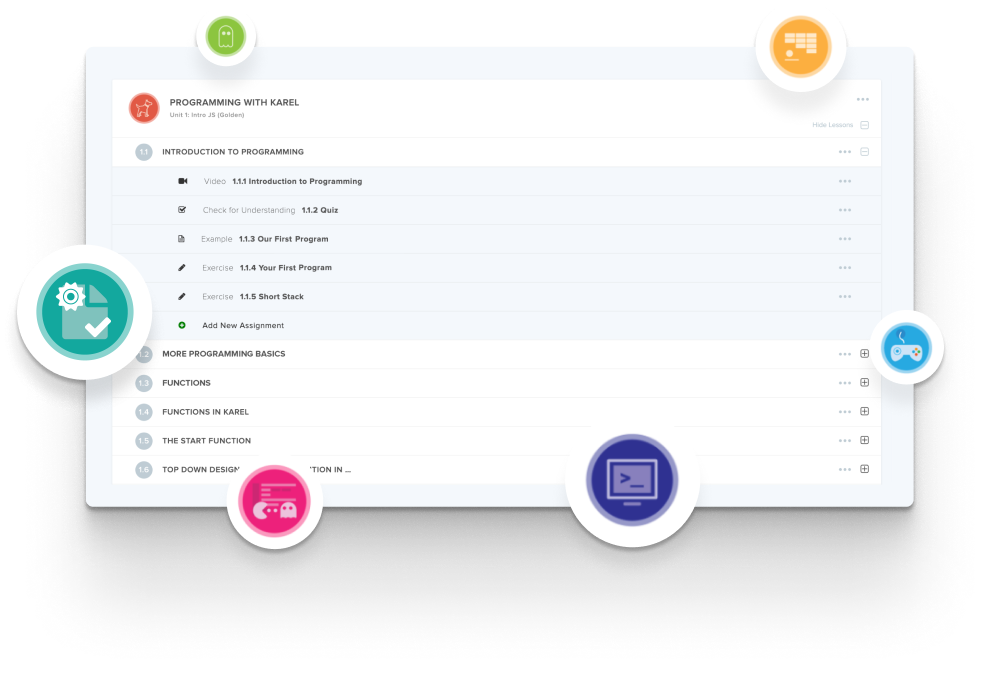
Create and organize Assignments in any CodeHS course that you're teaching. You can even add custom assignments to pre-existing CodeHS courses.
Learn MoreDidn't find what you were looking for? Here are a few links that might be useful to you.